Menstrual health coaching for active women
Menstrual health coaching for active women who want to move and recover with more context.
Training, sport, busy schedules, appetite, sleep, recovery, and menstrual symptoms can all overlap. Coaching gives you space to understand your own patterns and build routines that support an active life without assuming your cycle should dictate every workout.
- Private online support
- Built around your real routine
- No rigid cycle-syncing rules
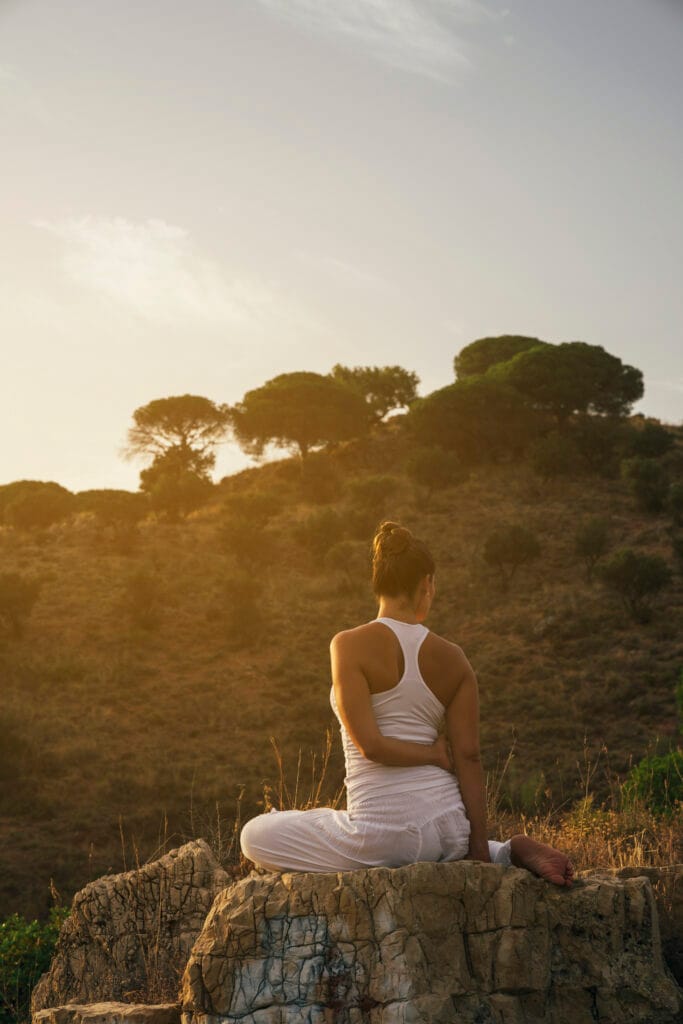
Your cycle can add context without becoming your training plan.
Active does not have to mean all-or-nothing
You can care about performance and still make room for recovery.
The goal is not to avoid training during your period or follow a universal four-phase workout plan.
We look at what you actually notice across training, energy, sleep, appetite, soreness, symptoms, stress, and recovery so you can make more informed day-to-day choices.
This is lifestyle coaching, not sports medicine, physiotherapy, medical nutrition therapy, or specialist athlete health care. Persistent pain, injuries, disordered eating, missing periods, or other health concerns need appropriate professional assessment.
When active routines get harder to read
Your body gives you information, but you are not sure what to do with it.
We focus on patterns that may help you make training and recovery more sustainable.
Some sessions suddenly feel harder
You notice days when the same training load feels very different and want more context before changing everything.
Recovery feels inconsistent
Sleep, soreness, stress, symptoms, or a busy schedule can make recovery harder to judge.
Appetite changes around your cycle
You want a more neutral way to respond to hunger and cravings without treating food as a reward or failure.
You are unsure when to push or adapt
You want flexible decision-making rather than a rule that says every period day should be a rest day.
Symptoms interrupt consistency
Pain, fatigue, bloating, or other symptoms sometimes affect training and you want a practical plan for those days.
Fitness advice feels too generic
You want to understand your own patterns instead of following assumptions about what every woman should do in each phase.
What we can explore
Build an active routine around your real patterns, not a generic cycle chart.
The conversation can connect training with the rest of your life instead of treating exercise in isolation.
- Training energy and perceived effort across different days
- Recovery, sleep, stress, soreness, and workload outside exercise
- Appetite, hydration, and general nourishment around an active schedule
- How to adapt a session when symptoms change what feels realistic
- Simple cycle and symptom tracking without over-monitoring
- When symptoms, injuries, missing periods, or other concerns deserve clinical assessment
How support works
Use your observations to make better training and recovery decisions.
The aim is flexible self-awareness, not a menstrual-phase workout prescription.
Before the session
Map what is actually demanding your energy
We start with your schedule, cycle observations, symptoms, recovery, movement, meals, sleep, work patterns, and the parts of daily life that feel hardest to keep consistent.
During the session
Look for useful patterns without forcing a formula
We explore what changes for you and what stays stable, without assuming every cycle should look the same or that one phase determines how you should work, train, or rest.
After the session
Leave with actions that survive real life
You leave with a small set of practical actions that can flex around training, deadlines, long shifts, travel, symptoms, and changing energy.
Your coaching session
A practical session for your active routine
- Format
- Private online session
- Focus
- Cycle context + sustainable routines
- Next step
- Practical personalised actions
What you can take away
More confidence adjusting effort without losing sight of consistency.
A clearer picture of what affects your training and recovery
More flexible ways to adapt exercise when symptoms or energy change
A simpler approach to appetite, rest, and recovery around an active life
Clearer boundaries between lifestyle coaching and issues that need clinical care
Responsible support
Active-women coaching stays within non-clinical menstrual wellbeing support.
Coaching does not diagnose RED-S, menstrual disorders, injuries, hormonal conditions, nutritional deficiencies, or any other medical issue, and it does not prescribe rehabilitation or a sports-performance programme.
If you have absent or very irregular periods, persistent pain, recurrent injury, significant fatigue, disordered eating, or another health concern, seek assessment from appropriately qualified healthcare and sports-health professionals.
Explore performance coaching
Choose the performance context that feels closest to your life.
The same core menstrual-health approach can be adapted to different kinds of demanding routines.
Busy Professionals
Balance work, movement, travel, meals, and recovery when the week is crowded.
Explore busy-professional coachingManagers & Leaders
Support sustainable performance around leadership responsibilities and changing energy.
Explore leadership coachingCycle Awareness
Step back and build a simpler understanding of your own menstrual patterns.
Explore cycle awarenessFrequently asked questions
Questions about Menstrual Health Coaching for Active Women
Do I need to stop training during my period?
Not automatically. Coaching does not use a blanket rule that everyone should avoid exercise during menstruation. We look at your symptoms, energy, preferences, and any relevant professional guidance.
Will you create a cycle-based training programme?
No. The coaching focuses on menstrual awareness and practical lifestyle support rather than prescribing a sports-performance or rehabilitation programme.
Can coaching help if my periods have stopped?
Absent periods need appropriate medical assessment. Coaching can support general routines and help you organise observations, but it does not diagnose the cause.
Can we discuss appetite and food around training?
Yes, at the level of general nourishment habits and everyday routines. Clinical nutrition, eating disorders, deficiencies, and specialist sports nutrition should be managed by appropriately qualified professionals.
Is this only for competitive athletes?
No. It is for active women whose exercise, sport, training, or physically demanding routine is an important part of their life.
Your next step
Want your training routine to feel more informed and less rigid?
Book a private session to explore your own cycle, energy, recovery, symptoms, and active routine.